Companies have historically navigated their course propelled by the twin forces of power and profit. Power, as the capacity to command resources and exert influence within the organisational structure, has been a fundamental principle.
Coupled with this has been the pre-eminence of profit, deeply rooted in the shareholder value theory that prioritises the augmentation of returns for the organisation’s owners.
Traditional models of corporate governance have been erected upon these very foundations, placing considerable emphasis on resource control and the relentless pursuit of shareholder wealth.
However, the business world is in constant flux, and these established pillars alone can no longer provide a comprehensive definition of effective corporate governance in today’s rapidly evolving environment. There is a growing recognition, underscored by numerous corporate failures stemming from an unwavering focus on short-term shareholder returns, that a third crucial pillar – purpose – is essential. This acknowledges a company’s broader role that extends beyond mere financial gains, accepting the inherent limitations of a strictly profit-centric approach. As argued by Milton Friedman in 1970, the primary social responsibility of business was deemed to be the pursuit of increased profits.
Yet, the repercussions of this doctrine, highlighted by the collapses of entities like Enron, Parmalat, Lehman Brothers, and WeWork, have starkly illustrated the perils of neglecting ethical considerations, long-term sustainability, and the interests of stakeholders beyond shareholders.
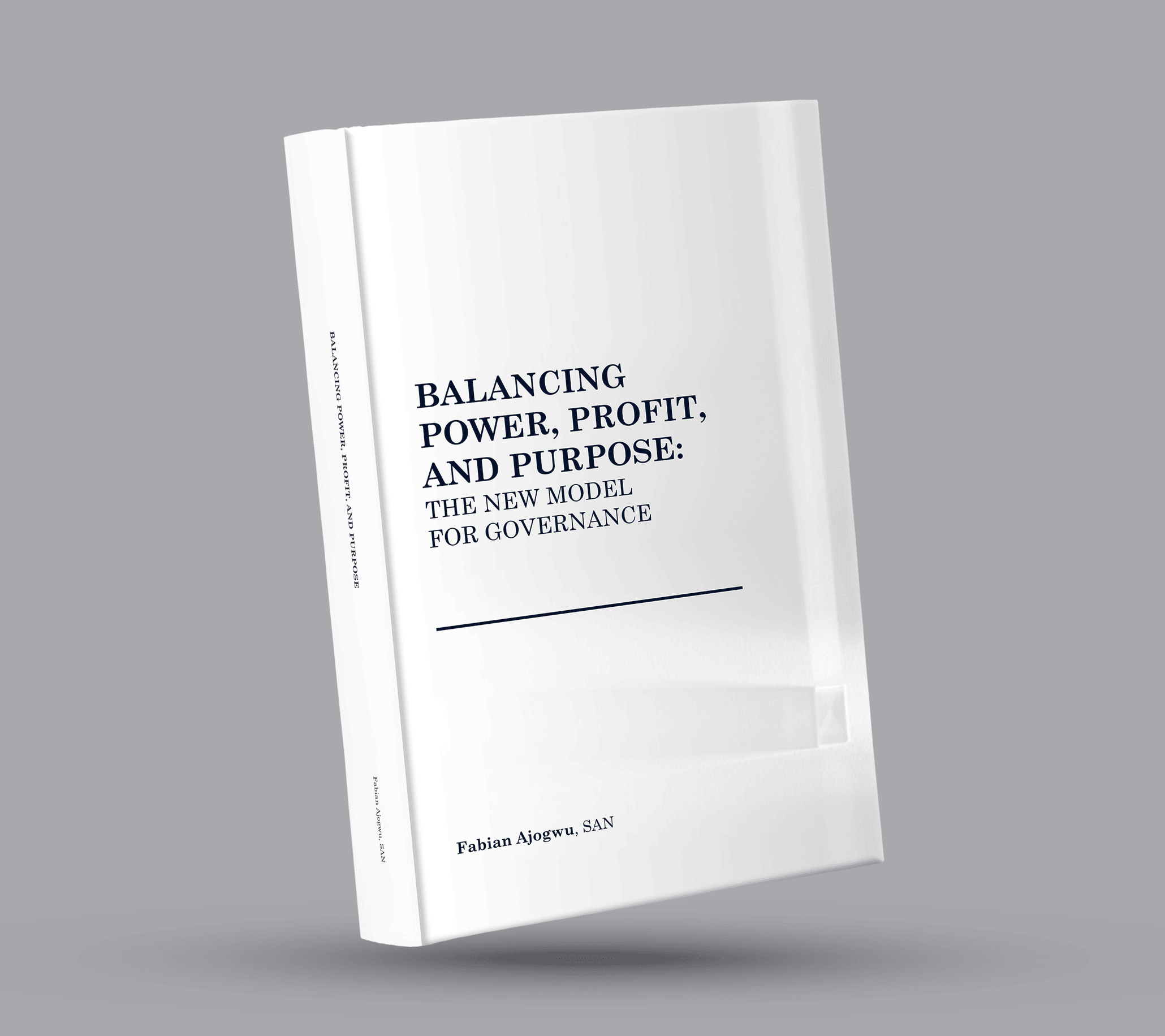
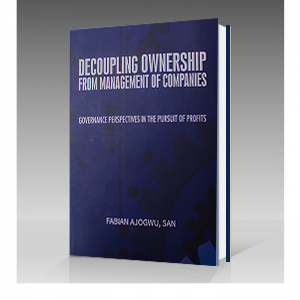
This book posits that the trajectory of a successful enterprise in the future hinges on transcending this traditional, often narrow, preoccupation with power and profit. Corporations must broaden their horizons to encompass their wider impact on all stakeholders, including employees, customers, suppliers, communities, and the environment. By doing so, businesses can aspire to achieve sustainable success that harmonises the often-competing interests of these diverse groups. This paradigm shift is embodied in the rise of behavioural governance, which recognises the fundamental influence of human behaviour, ethics, and corporate decision-making on shaping governance practices and outcomes. It calls for a more holistic approach that considers how these factors interact to influence corporate actions, moving towards a purpose-driven model that prioritises the welfare of all stakeholders and embeds ethical considerations into every corporate decision.
This new model aligns closely with the principles of conscious capitalism, which advocates for businesses to operate ethically with a purpose beyond mere profit, fostering trust, compassion, collaboration, and long-term value creation for all stakeholders. It acknowledges the “4 Ps” of corporate sustainability – people, planet, purpose, and profit – highlighting the growing stakeholder interest in a company’s motivations and its efforts to positively impact society and the environment.
Through insightful analysis and illustrative case studies – ranging from multinational corporations like Nestlé and purpose-led entities such as Patagonia, to Nigerian institutions like Guinness Nigeria Plc and the Tony Elumelu Foundation – this work explores how organisations are actively integrating purpose into their governance structures.
It delves into the critical role of ethics and introduces the AFG Model, a structured framework designed to integrate key governance principles essential for ethical, sustainable, and purpose-driven leadership.
The AFG Equation, S = Ex (BG + CC + PDG + OBCG + RL+ AC), further elucidates the interconnectedness of these elements, underscoring the foundational role of ethics in achieving sustainability.
Ultimately, this book invites leaders, professionals, and stakeholders to reflect on their roles in shaping a more responsible, sustainable, and ethically driven business landscape. It argues that by embracing purpose-driven governance, organisations can not only achieve enduring profitability but also cultivate trust, enhance stakeholder loyalty, and contribute meaningfully to the greater good. The journey towards balancing power, profit, and purpose is not merely an aspiration but a fundamental imperative for navigating the complexities of the modern business world and building a more equitable and sustainable future for all.
Fabian Ajogwu, OFR, SAN, FCArb
Professor of Corporate Governance
Lagos Business School
May 20, 2025